
Musty smell when AC starts
Indoor Air Quality & Dehumidification
Controlling Mont Belvieu’s humidity to prevent biological growth and protect your home’s envelope.
Get QuoteThe Mont Belvieu Moisture Problem: It’s Not Just Heat
In our coastal climate, temperature is only half the battle. The real enemy of comfort and structural integrity is Relative Humidity (RH).
Standard air conditioners are designed primarily to lower temperature (Sensible Load). They remove humidity (Latent Load) only as a byproduct.
In Mont Belvieu, where ambient humidity often exceeds 80%, a standard AC often reaches its set temperature before it has removed enough moisture. This leaves your home cool but “clammy,” creating the perfect breeding ground for biological growth in your ducts and on your drywall.
The Problem:
At 75°F and 65% RH, your home feels like a sauna. At 75°F and 45% RH, it feels crisp and dry. Most contractors only address temperature—we engineer moisture control.
The Engineering Solution: Decoupling Moisture from Temperature
We don’t guess at air quality; we engineer it. To achieve the ideal 45-50% RH recommended by ASHRAE standards, we often must treat moisture independently of cooling.
1. Whole-Home Dehumidification
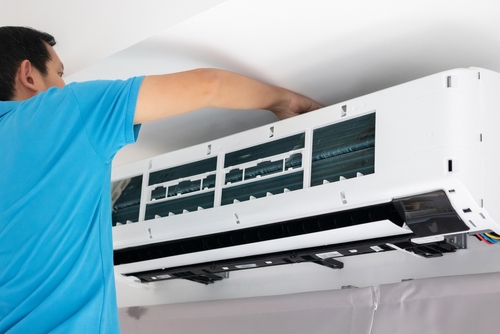
Portable units cannot handle the infiltration rate of a Gulf Coast home. We install industrial-grade whole-home dehumidifiers integrated directly into your central ductwork. These systems can remove 90-130 pints of moisture per day—far beyond what your AC alone can handle.
Shoulder Season Defense:
In spring and fall, when your AC doesn’t run often, humidity builds up. Our systems run independently, keeping your home dry even when the AC is off. This prevents the musty smell that develops when equipment sits idle in humid conditions.
The “75° Challenge”:
At 60% humidity, 75°F feels sticky. At 45% humidity, 75°F feels crisp. By controlling moisture, you can raise your thermostat and actually lower your energy bill. For every degree you raise the thermostat, you save 3-5% on cooling costs.
How It Works:
- Dehumidifier pulls air from the return duct, extracts moisture, and returns dry air to the supply plenum.
- Built-in humidistat monitors RH and cycles on/off automatically.
- Condensate drains to your AC’s drain line—no buckets to empty.
Financial Benefit:
Reducing humidity from 60% to 45% allows you to set the thermostat 2-3°F higher while maintaining the same comfort. This saves $200-$400/year on cooling costs.

2. MERV Filtration & Static Pressure Engineering
Many homeowners buy high-MERV filters from the hardware store, unknowingly choking their system. A filter that is too restrictive raises static pressure, killing your blower motor and reducing airflow.
The Physics Problem:
- A standard 1-inch MERV 13 filter has very little surface area. To capture small particles, it must be dense, which restricts airflow.
- High static pressure forces the blower motor to work harder, drawing more amps and shortening its lifespan.
- Reduced airflow causes the evaporator coil to freeze (starving it of warm air to absorb heat from). Learn more about frozen coil diagnostics.
Our Engineering Approach:
We install high-capacity media cabinets (4-5 inch thick filters). These provide the surface area needed to capture allergens (MERV 11-13) without restricting airflow or damaging your equipment.
What We Capture:
- MERV 11-13: Traps pollen, mold spores, dust mites, and pet dander (3-10 microns).
- Petrochemical Particulates: In Baytown/Mont Belvieu, industrial facilities release fine particulates. MERV 13 captures particles as small as 0.3 microns.
- Static Pressure Verification: We measure TESP after installation to ensure the filter isn’t strangling your system. For more on airflow optimization, see our Smart Zoning & Airflow Management page.
Financial Benefit:
High-capacity filters last 9-12 months (vs. 1-3 months for standard filters). Fewer replacements = less hassle and lower long-term cost.
3. UV Germicidal Purification
The dark, damp environment of an evaporator coil is prime real estate for biological growth. Even with perfect humidity control, organic material can accumulate on the coil and in the drain pan.
The Technology:
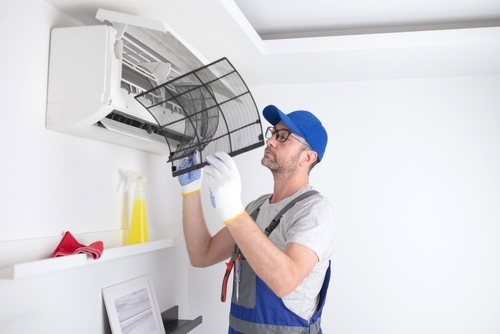
We install UV-C germicidal lights directly irradiating the evaporator coil. UV-C (254 nanometers wavelength) disrupts the DNA of mold spores, bacteria, and viruses, preventing them from colonizing your equipment and entering your airstream.
What It Kills:
- Mold & Mildew: Aspergillus, Penicillium, and Cladosporium spores are common in Gulf Coast HVAC systems.
- Bacteria: Legionella and other pathogens that thrive in standing water (drain pans).
- Volatile Organic Compounds (VOCs): UV-C also oxidizes chemical odors from cooking, pets, and cleaning products.
Financial Benefit:
UV lights prevent coil fouling, which reduces heat transfer efficiency. A clean coil operates 10-15% more efficiently than a fouled one, saving $100-$200/year.
Is Your Home Making You Sick?
If you smell musty odors when the AC kicks on, or if your windows sweat on the inside, your building envelope is compromised. We use hygrometers and dew-point calculations to identify the source of the moisture intrusion. Common culprits include:
Negative Building Pressure
Leaky return ducts in the attic create suction, pulling humid outside air into your home. This is a massive problem in Baytown where attic temperatures reach 150°F.
Oversized HVAC Equipment Short-Cycling
When your AC cools too fast and shuts off before removing humidity, moisture accumulates. This is why proper sizing with Manual J load calculations is critical.
Poor Attic Insulation
If your thermal envelope is compromised, warm, humid air penetrates through the ceiling. We inspect insulation R-values and recommend upgrades when necessary.
Lack of Mechanical Ventilation
Modern homes are tightly sealed (which is good for energy), but without controlled ventilation, indoor pollutants concentrate. We install Energy Recovery Ventilators (ERVs) that bring in fresh outdoor air while transferring energy to precondition it.
Warning Signs Your IAQ System Needs Engineering:
Stop Treating Symptoms. Engineer the Solution.
Air scrubbers and portable dehumidifiers are Band-Aids. We engineer permanent solutions integrated into your HVAC system.