
Structural load assessment (will your roof support the new unit’s weight?)
Heavy-Duty Climate Control Engineered for the Coastal Industrial Zone
Commercial RTU Service & Replacement
Rooftop units are the workhorses of commercial climate control—and in Baytown's industrial corridor, they face conditions that destroy standard equipment in half its expected lifespan.
We don't just swap boxes on rooftops. We engineer complete RTU solutions: crane logistics, structural assessments, precision curb adapters, and corrosion-resistant specifications that account for what Baytown's atmosphere actually does to HVAC equipment.
Standard air conditioning—the kind designed to make people comfortable—is the wrong tool for this job. It wastes capacity on humidity removal your server room doesn't need, fails during winter months when your servers still run hot, and provides zero redundancy when equipment fails.
Get QuoteIt's Not Just About the AC—It's About the Lift
A 15-ton rooftop unit weighs approximately 1,200 pounds. Getting it from the street to your roof—and getting the old one down—requires more than a truck and good intentions.
Most HVAC contractors subcontract the crane work, creating finger-pointing when something goes wrong. We manage the entire scope:
Pre-Lift Planning:
Lift Day Execution:
Post-Lift Completion:
One Call Manages the Entire Project:
You don't coordinate between crane companies, HVAC contractors, and electricians. We own the entire scope from permit application to commissioning documentation. Your involvement: approve the quote and hand over the roof access key.
Why Standard RTUs Die Young in Baytown
Standard RTU manufacturers design equipment for "typical" conditions. Baytown's conditions aren't typical.
The Chemistry of Coil Failure:
Timeline: Unprotected coils in Baytown's industrial zones show significant degradation within 5-7 years. Protected coils maintain efficiency for 12-15+ years.
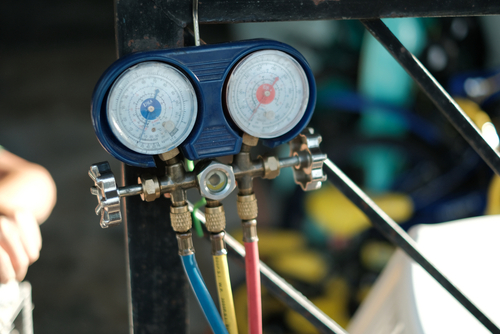
Warning Sign: Pitting Corrosion
If your maintenance technician reports "pitting" on copper refrigerant tubing, the corrosion has progressed beyond the fins into the tubing itself. Refrigerant leaks are imminent. This unit is on borrowed time.
Asset Hardening: Specifying RTUs for Baytown's Reality
"Fast service" doesn't matter if the replacement unit rots out in 7 years. We specify equipment and coatings that account for actual operating conditions.
Factory-Applied Coil Coatings
- E-Coat (Electrodeposition): Factory-applied epoxy coating that covers all surfaces uniformly. Excellent salt/sulfur resistance.
- Phenolic Coatings: Baked-on coating with superior chemical resistance. Preferred for facilities adjacent to chemical processing.
- Heresite / Blygold: Premium protective coatings specifically engineered for HVAC in corrosive environments.
Field-Applied Protection
- Post-installation coil coating for standard equipment
- Coil cleaning + coating protocol for units with early-stage corrosion
The ROI of Coil Protection:
A factory-coated coil adds $800-2,000 to a new RTU installation. That coating protects a $15,000-40,000 asset for an additional 5-8 years of service life. The math isn't complicated.
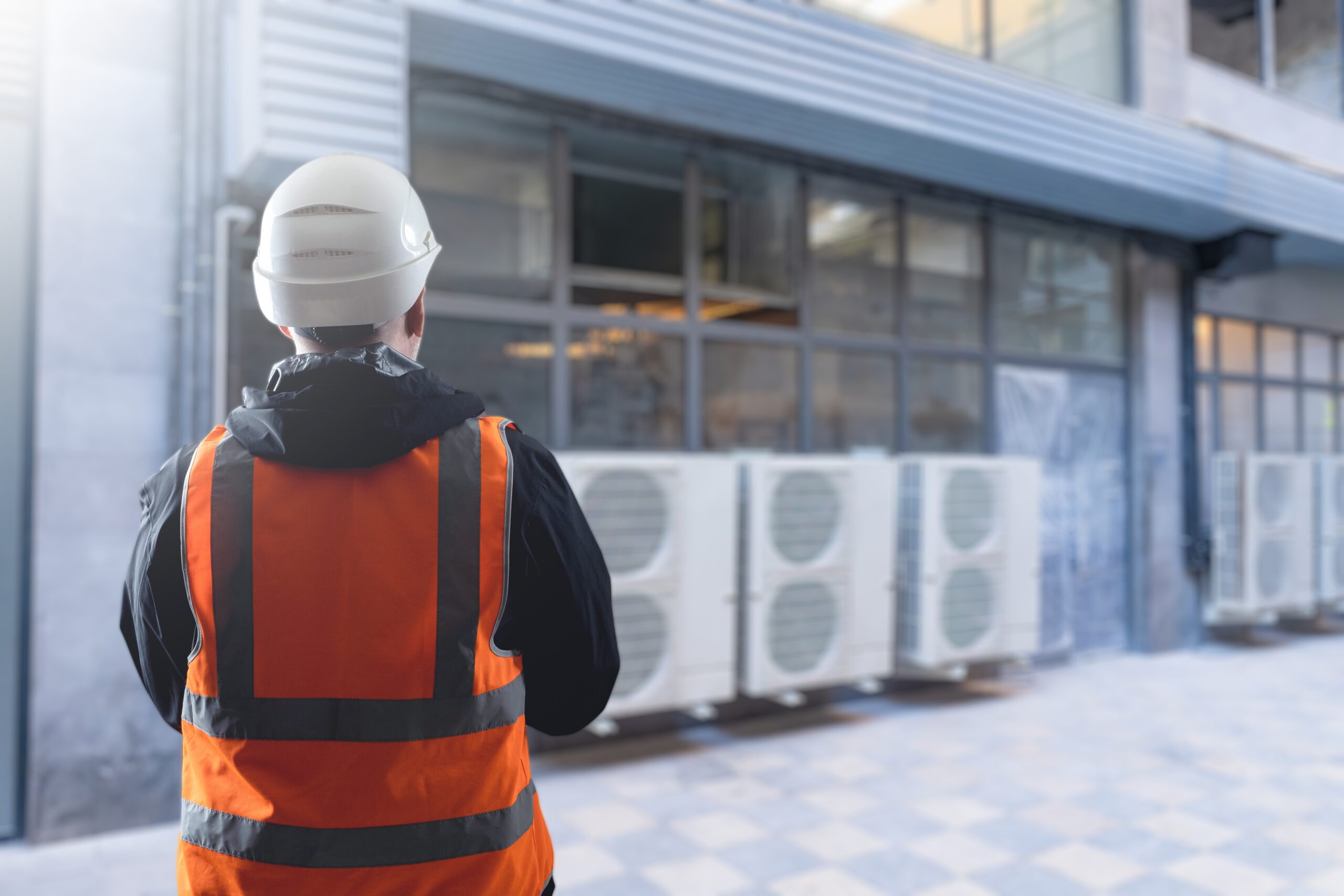
Precision Retrofits: Why Curb Adapters Make or Break Installations
Most commercial RTU replacements are retrofits—installing a new manufacturer's unit on an existing roof curb designed for a different brand. The connection between new unit and old curb is the curb adapter.
The Problem with "Universal" Adapters:
Our Standard: Custom-Fabricated Curb Adapters
We measure every existing curb and fabricate adapters in our sheet metal shop that:
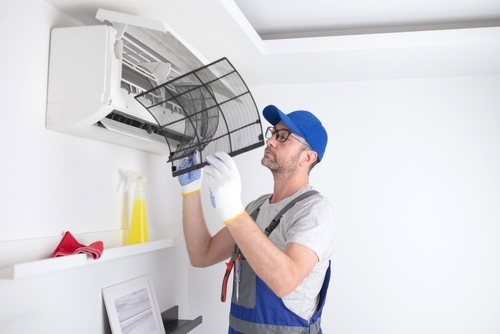
Making the ROI Decision: When to Repair, When to Replace
Facility managers face this question constantly: spend money fixing the current unit, or invest in replacement? We help you run the numbers honestly.
The 50% Rule of Thumb
If proposed repair costs exceed 50% of current replacement value, replacement usually makes financial sense.
Factors Favoring Repair
- Unit is less than 8 years old
- Failure is isolated (single component, not systemic)
- Coils show minimal corrosion
- Unit was properly sized originally
Factors Favoring Replacement
- Unit is 12+ years old
- Compressor failure (major component, expensive repair)
- Visible coil corrosion or refrigerant leaks
- Unit was oversized (chronic short-cycling)
- Multiple repair visits in past 24 months
Our Commitment to Honest Assessment:
We don't push replacement when repair makes financial sense. We document our findings, show you the numbers, and let you make an informed decision. If repair is the right call, we'll tell you—even though replacement would be a larger invoice.
Right-Sizing: Why Your Last Unit Might Have Been Wrong
Commercial buildings across Baytown are full of oversized RTUs—equipment installed based on "rules of thumb" rather than actual load calculations.
The Oversizing Problem:
An oversized RTU satisfies thermostat setpoint quickly, then shuts off. This "short-cycling" creates multiple problems:
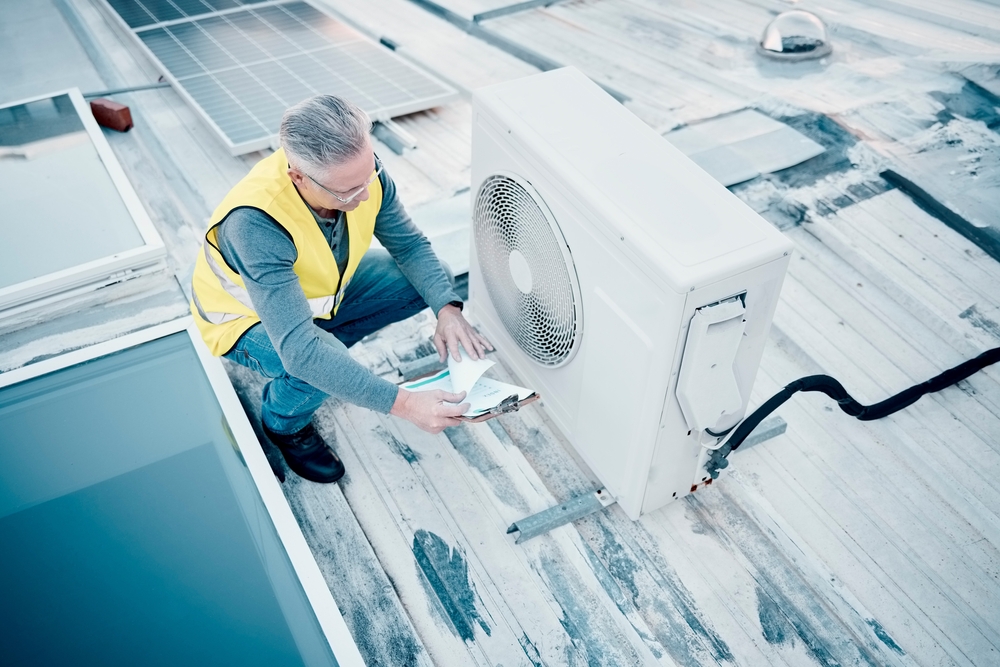
Baytown Humidity Warning:
Standard load calculation software uses generic humidity assumptions. Baytown's actual conditions—sustained 80%+ relative humidity for months at a time—require latent load adjustments that most contractors skip. Undersized latent capacity means your building stays clammy no matter how cold you set the thermostat.
From Assessment to Commissioning: The Complete Process
A 2,000 CFM MUA unit connected to a single diffuser creates a wind tunnel effect. Workers avoid the area. In kitchens, drafts push cooking vapors away from the hood. Proper distribution design is as important as equipment selection.
Site Assessment
Document existing equipment, measure roof curb dimensions, assess structure, identify crane requirements.
Engineering & Specification
Calculate actual loads, specify corrosion protection, design custom curb adapter, develop project timeline.
Proposal & Approval
Detailed written proposal with equipment specs, transparent pricing, timeline milestones, warranty documentation.
Pre-Installation
Fabricate curb adapter, coordinate crane and permits, order equipment, schedule installation.
Installation Day
Remove old equipment, install curb adapter, set new unit, complete connections, initial testing.
Commissioning & Documentation
Verify airflow and static pressure, document operating parameters, program controls, provide documentation package.
What You Receive:
Complete project documentation including equipment specifications, warranty information, coil coating certification, load calculations, and baseline operating parameters. This documentation supports warranty claims and future maintenance planning.
Asked Questions
What size RTUs do you service and install?
We handle rooftop units from 5 tons to 25 tons, covering retail, restaurant, office, warehouse, and light industrial facilities.
How long does a typical RTU replacement take?
Most single-unit replacements are completed in one day. Complex retrofits may extend to 2-3 days.
What's the difference between standard and coated coils?
Standard coils are bare metal. Coated coils have a protective layer preventing corrosive chemicals from contacting metal surfaces. In Baytown, coated coils last 5-8 years longer.
Can you coat the coils on my existing RTU?
Yes, if corrosion hasn’t progressed to severe pitting. We offer professional cleaning followed by field-applied protective coating.
What's a curb adapter and why does it matter?
A curb adapter connects a new RTU to an existing roof curb. Poor adapters cause water leaks and airflow restrictions. We custom-fabricate ours for precise fit.
Do you handle the crane and permits?
Yes. Crane scheduling, street permits, traffic control, and safety barricades are all included. You don’t coordinate multiple contractors.
Let's Assess Your RTU Situation
Whether you're facing an emergency replacement, planning a scheduled upgrade, or want to understand your equipment's remaining useful life, we start with honest assessment, clear options, and transparent pricing.