Air Starvation: Exhaust fans pull air out faster than it enters. Building becomes a partial vacuum.
Balancing Airflow to Ensure Safety, Comfort, and Code Compliance
Make-Up Air & Industrial Ventilation
Every cubic foot of air your kitchen hood, welding exhaust, or industrial ventilation system removes must be replaced. When exhaust exceeds supply, your building goes into negative pressure—creating safety hazards, comfort problems, and code violations that most facility managers don't recognize until inspectors arrive.
Service Line engineers complete ventilation solutions: exhaust balanced with make-up air, tempered for Baytown's humidity, and designed to maintain the slight positive pressure that keeps your building safe, comfortable, and compliant.
Get QuoteWhy "Just Add an Exhaust Fan" Creates Bigger Problems
Air pressure inside a building should be slightly positive—meaning air naturally wants to flow outward when you open a door. This keeps dust, insects, and unconditioned air from infiltrating, and ensures combustion appliances vent properly.
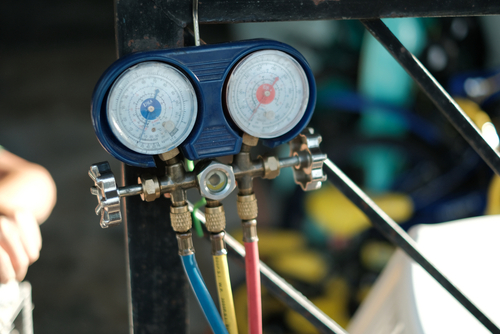
The Negative Pressure Cascade:
The Doorknob Test:
Here's a simple diagnostic anyone can perform: If your exterior doors whistle when closed, are difficult to pull open, or slam shut with surprising force, your building is starving for air. That resistance you feel? It's your building trying to suck air through the only opening available—the door you're trying to open.
Replacing What You Remove—The Right Way
Make-up air systems replace air removed by exhaust, maintaining neutral or slightly positive building pressure. But in Baytown's climate, simply blowing outside air into the building creates new problems.
The Tempered Air Requirement:
Tempered Make-Up Air Solutions:
Baytown Humidity Reality:
With dew points regularly above 75°F, untempered make-up air is not an option—it's a mold cultivation system. Every MUA installation in ZIP codes 77520, 77521, 77523 requires tempered (conditioned) air to prevent moisture damage. The "savings" from an untempered unit disappear in the first remediation bill.
COMMERCIAL KITCHEN VENTILATION
NFPA 96 Compliance and Kitchen Exhaust Balancing
Commercial kitchens face the most demanding ventilation requirements. NFPA 96 requires make-up air systems interlock with kitchen exhaust hoods. When the hood operates, the MUA must operate. This isn’t optional—it’s code.
Why the Interlock Matters
A hood exhausting 2,000 CFM removes the entire air volume of a small restaurant every few minutes. Without interlocked make-up air: severe negative pressure, doors impossible to open, dangerous flame disturbance, grease deposited throughout building, gas appliance backdraft.
Our Commercial Kitchen Process
Code Compliance Guarantee:
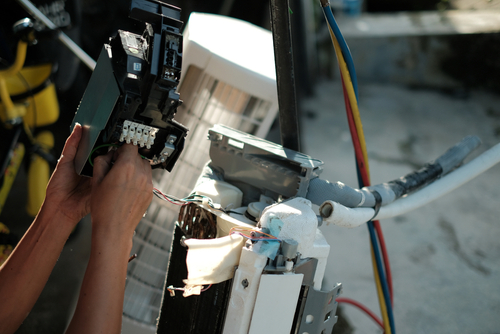
Every commercial kitchen ventilation system we design and install meets or exceeds NFPA 96 requirements including: proper interlock wiring, UL-listed grease duct materials, fire suppression integration, and documented air balance verification. We provide the documentation your fire marshal requires.
Air Quality, Heat Load, and Worker Safety
Industrial facilities face challenges beyond comfort. Welding fumes, machine heat, chemical vapors, and dust must be controlled for worker health and OSHA compliance.
Air Changes Per Hour (ACH):
Heat Load in Industrial Spaces
Beyond solar gain and lighting, industrial facilities add: process equipment (motors, compressors, ovens), machinery friction, product heat (molded plastics, baked goods, hot metal), and high-bay lighting. We calculate actual loads including process sources.
Targeted Solutions:
OSHA Compliance Note:
OSHA requires employers to provide adequate ventilation to control employee exposure to hazardous substances. Specific requirements vary by contaminant—welding fumes, solvent vapors, and particulates each have exposure limits. We can help you understand requirements and design ventilation that achieves compliance.
Moving Air Without Creating Problems
A 2,000 CFM MUA unit connected to a single diffuser creates a wind tunnel effect. Workers avoid the area. In kitchens, drafts push cooking vapors away from the hood. Proper distribution design is as important as equipment selection.
Velocity Control
Diffuser selection for <500 FPM at occupied level
Room Air Washing
Air introduced at ceiling level with sufficient diffusion to mix before reaching occupants
Kitchen-Specific Solutions
Perforated plenums or slot diffusers creating gentle flow toward hood capture zone
In-House Fabrication Advantage:
Standard catalog diffusers don't always fit unique requirements. We fabricate custom plenums, transitions, and diffuser assemblies in our sheet metal shop—matching your specific ceiling heights, obstruction constraints, and airflow requirements. No compromises due to catalog limitations.
Measuring What Matters
"The building feels drafty" isn't diagnostic data. We measure actual building pressure to verify performance.
Static Pressure Testing:
The Test You Can Do Today:
Close all exterior doors. Turn on all exhaust equipment (hood, bathroom fans, etc.). Now try to open an exterior door. Does it require noticeable force to pull open? Does it whistle at the seams? That's negative pressure—and it's telling you something is wrong with your building's air balance.
Asked Questions
What is make-up air and why do I need it?
Make-up air replaces air removed by exhaust systems. Without it, your building goes negative—causing hard-to-open doors, humidity problems, potential CO backdraft, and HVAC overload.
What's the difference between tempered and untempered MUA?
Untempered blows raw outside air in. Tempered conditions the air first (heating, cooling, dehumidifying). In Baytown’s humidity, tempered is essential to prevent condensation and mold.
How do I know if my building has negative pressure?
Symptoms: doors hard to open or that whistle, humidity spikes when exhaust runs, drafts near walls, pilot lights blowing out, odors from floor drains.
What is an interlock and why does my kitchen need one?
An interlock forces MUA to run whenever the exhaust hood runs. NFPA 96 requires this for commercial kitchens. It’s code, not optional.
How much make-up air does my kitchen need?
Typically 80-90% of hood exhaust CFM from MUA, with the remainder from transfer air. We calculate specific requirements for each installation.
Why does my restaurant get humid when the hood runs?
Hood exhausts faster than air is replaced. Building goes negative. Humid outside air infiltrates through every gap. Balanced, tempered MUA eliminates this.
Let's Solve Your Ventilation Challenge
Whether you're dealing with doors that won't open, humidity when exhaust runs, code compliance concerns, or planning new kitchen/industrial operations—we can assess your situation, identify root causes, and recommend solutions.