
Architectural plans: layouts, ceiling heights, windows, orientation
Precision Climate Systems for Custom Homes and Commercial Projects
Construction HVAC & Custom Fabrication
When you sub-contract HVAC to Service Line, you're not getting a crew that shows up with standard duct kits and forces them to fit. You're getting construction professionals who coordinate with your schedule, identify conflicts before they become change orders, and build systems that match your plans—not the other way around.Standard air conditioning—the kind designed to make people comfortable—is the wrong tool for this job. It wastes capacity on humidity removal your server room doesn't need, fails during winter months when your servers still run hot, and provides zero redundancy when equipment fails.
The system fits the house. Not the other way around.
Get QuoteThe system fits the house. Not the other way around.
The Blueprint Phase: We Don't Just Quote—We Review
Most HVAC bids are based on square footage and a quick glance. That leads to conflicts during rough-in, change orders, and systems that don't perform. We approach it differently.
What We Review Before Bidding:
What We Identify Before You Frame:
Load Calculations for Permitting:
We provide ACCA-compliant Manual J load calculations as part of our pre-construction package. When the building department asks for documentation, you have it—signed, sealed, and ready for permit submission.
Built, Not Bought: Custom Sheet Metal for Every Project
Standard fittings from the supply house are "good enough" for most installations. In construction, "good enough" creates problems: transitions that don't match, elbows that won't fit framing, boots that don't align with rough-ins, takeoffs that restrict airflow.
The Supply House Approach:
Contractor orders standard fittings. Installer discovers they don't fit. Field modifications with excessive tape, duct board patches, improvised transitions. Result: restricted airflow, leaks, mechanical rooms that look like patchwork.
Our Approach: In-House Shop
Benefit to GCs: Schedule Control
No waiting on third-party fabricators. When change orders happen—and they always happen—we bend the metal that day. Your rough-in doesn't wait on someone else's production schedule.
Right-Sized Systems for Modern Construction
Modern homes—especially with spray foam—are dramatically tighter than construction from 10-15 years ago. Equipment sizing rules for leaky houses create serious problems in tight envelopes.
The Tight House Problem:
A spray foam home with a 2-ton actual load gets a 3.5-ton system “because that’s what houses this size need.” System satisfies thermostat in 8-10 minutes instead of 15-20, fails to remove humidity, house feels clammy at 72°F, occupant lowers to 68°F, energy spikes, elevated humidity promotes mold in sealed cavities.
Our Engineering Protocol:
- Manual J (Load Calculation): Room-by-room analysis based on actual specs, not square footage rules
- Manual S (Equipment Selection): Matching equipment including latent (humidity) capacity—critical in Baytown
- Manual D (Duct Design): Sizing ductwork for actual CFM without excessive static pressure
The Result:
Equipment that runs longer cycles, removes humidity effectively, maintains consistent temperatures room-to-room, and operates at design efficiency. No hot spots. No humidity complaints. No warranty callbacks.
Warning: Oversized Equipment in Spray Foam Homes
We've been called to diagnose mold problems in homes less than two years old—homes with brand-new "high efficiency" systems. The cause: dramatically oversized equipment that short-cycles, never removing the moisture that Baytown's humidity pumps into the building envelope. Proper sizing isn't optional in tight construction.
First-Time Test Passes: Our Rough-In Protocol
Duct Sealing Standard:
We seal all duct joints with mastic—not tape alone. Every longitudinal seam, every transverse joint, every boot connection, every penetration. Mastic is permanent; tape fails.
Construction Protection:
Why Tape Fails:
Duct tape adhesive degrades with temperature cycling. Within 2-5 years, taped joints separate, creating leakage that wasn't present at inspection. Mastic is permanent—it doesn't dry out, crack, or release. Every joint we seal today will still be sealed when the homeowner sells.

The Baytown Humidity Challenge in Sealed Construction
Spray foam creates dramatically tighter envelopes. In Baytown's humidity, this creates specific challenges requiring specific solutions. Less infiltration is good for efficiency, but means less natural dilution of interior moisture.
Our Tight Envelope Protocol:
Our Tight Envelope Protocol:
Baytown Humidity Reality:
With outdoor dew points regularly exceeding 75°F, moisture constantly tries to migrate into the building envelope. A tight house with undersized dehumidification will develop elevated interior humidity regardless of thermostat setting. This isn't a comfort issue—it's a mold risk.
We Don't Just Turn It On—We Tune It
Startup Commissioning:
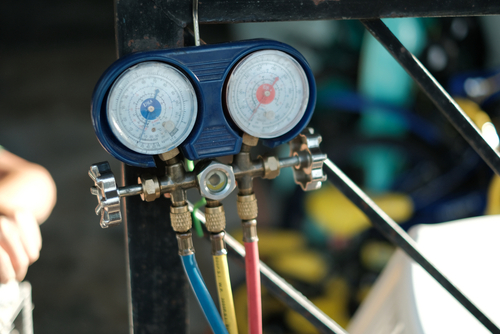
- Refrigerant charge verified by subcooling/superheat measurement
- Total system CFM measured against design requirements
- Static pressure verified supply and return
- Electrical: voltage, amps, phasing confirmed
- Safety devices and controls tested
Room-by-Room Air Balancing:
Room-by-Room Air Balancing:
We measure CFM at each supply register with calibrated flow hood, adjust dampers to achieve design airflow, verify returns adequate for balanced operation, and document final readings.
The Builder Benefit: Zero Hot-Spot Callbacks
When the homeowner complains that the back bedroom is always hot, they call you—not us. Proper air balancing eliminates those calls before move-in. Every room receives design airflow. Every homeowner gets consistent comfort. Your warranty exposure drops.
Project Types We Support
Project Size Range:
We're scaled for projects from 3,500 to 50,000 square feet. Smaller projects receive the same engineering attention as larger ones—but if you're building a high-rise or hospital, we'll recommend contractors with appropriate capacity.

Asked Questions
Do you provide Manual J calculations for permits?
Yes. ACCA-compliant Manual J included in standard scope—not an add-on fee.
How early should we involve you?
Ideally during design development. At minimum, before framing begins.
How do you handle change orders?
In-house fabrication means we respond quickly—often same-day for sheet metal modifications.
What's your approach to spray foam homes?
Right-sized equipment with enhanced dehumidification. We’ve seen too many mold problems from oversized systems in tight envelopes.
How do you ensure blower door test passes?
Mastic sealing on every joint, proper fabrication, and construction-phase protection. Our protocol is designed for first-time passes.
Let's Review Your Next Project
Whether you're a GC looking for reliable HVAC sub, a custom builder planning a high-performance home, or an architect specifying mechanical systems—send us plans. We'll provide a real assessment, not a square-footage guess.